Subaru BRZ / Engine
K24 engine swap
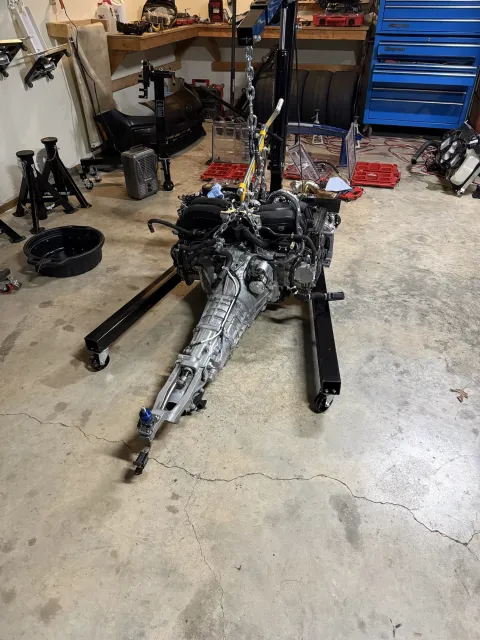
The FA24 came out for a Honda K24A on a Haltech standalone, with a harness built from scratch.
- Status
- Complete
- Started
- Updated
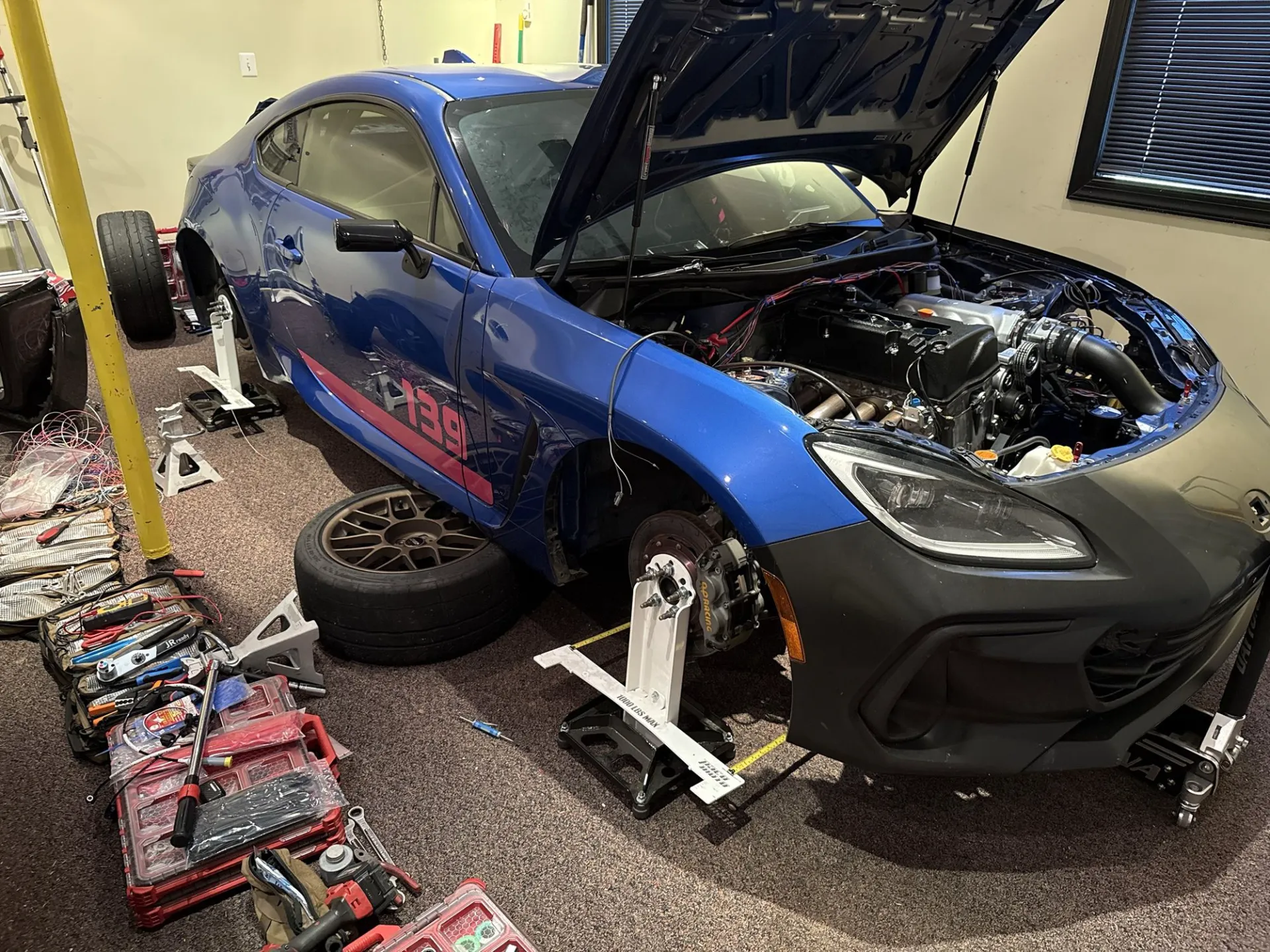
The FA24 came out because of its electronics, not its power. After the cage, nothing in the factory network worked reliably again, the dealer gave up on it, and the intermittent ABS ended with the car in a tire wall. A Honda K24 on a standalone ECU gave me a car I understand down to the pin. It is also about 100 lb lighter than the FA24.
What went in
| Area | What I ran |
|---|---|
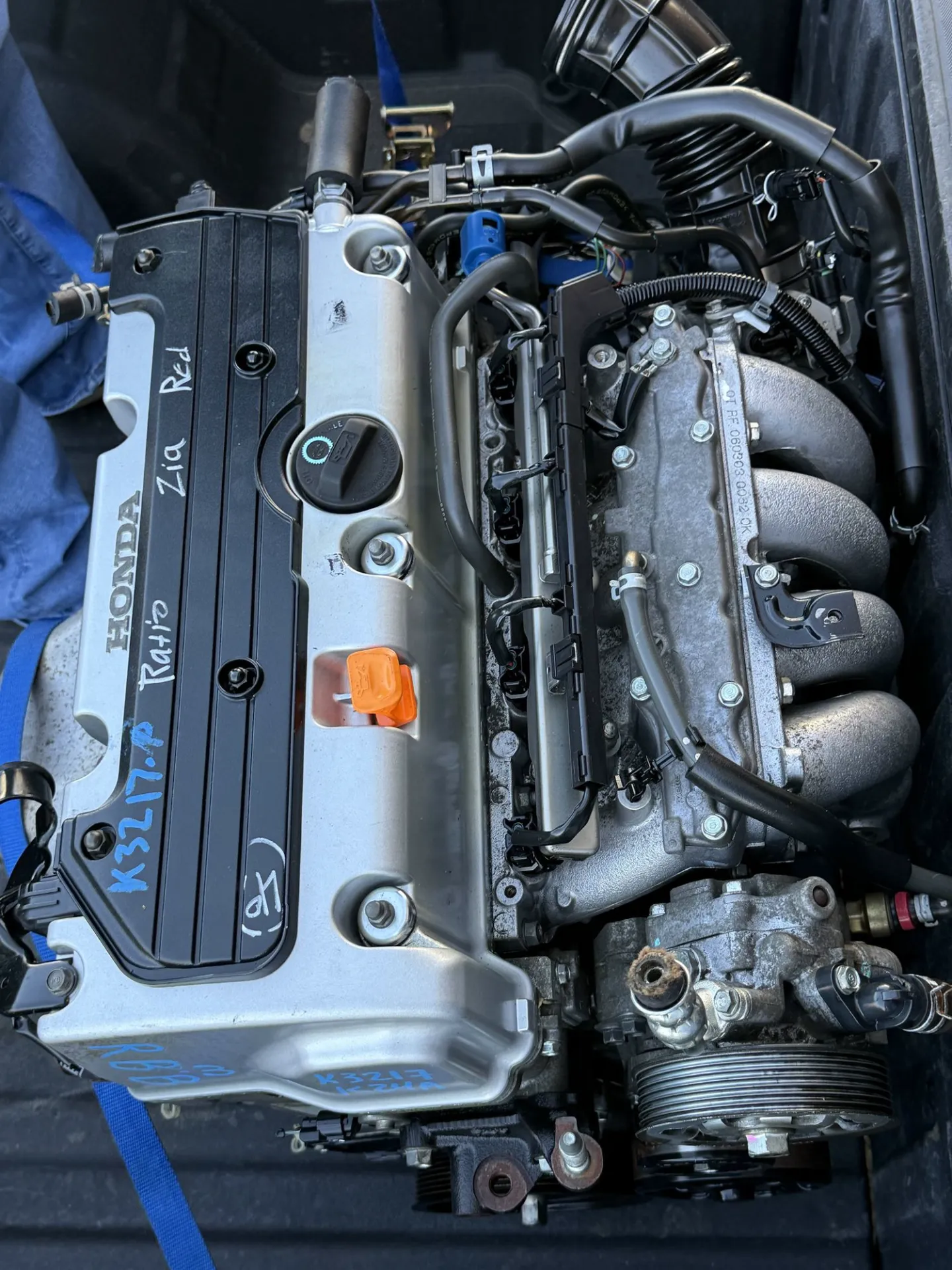
| Engine | Used JDM Honda K24A (RBB-3), stock internals, with a K20 oil pump |
| Transmission | Stock BRZ six-speed manual, stock Torsen diff |
| Swap kit | KPower: adapter plate to the stock gearbox, swap oil pan, relocated alternator, intake manifold and header |
| Engine management | Haltech standalone ECU |
| Power distribution | Haltech PDM 16 |
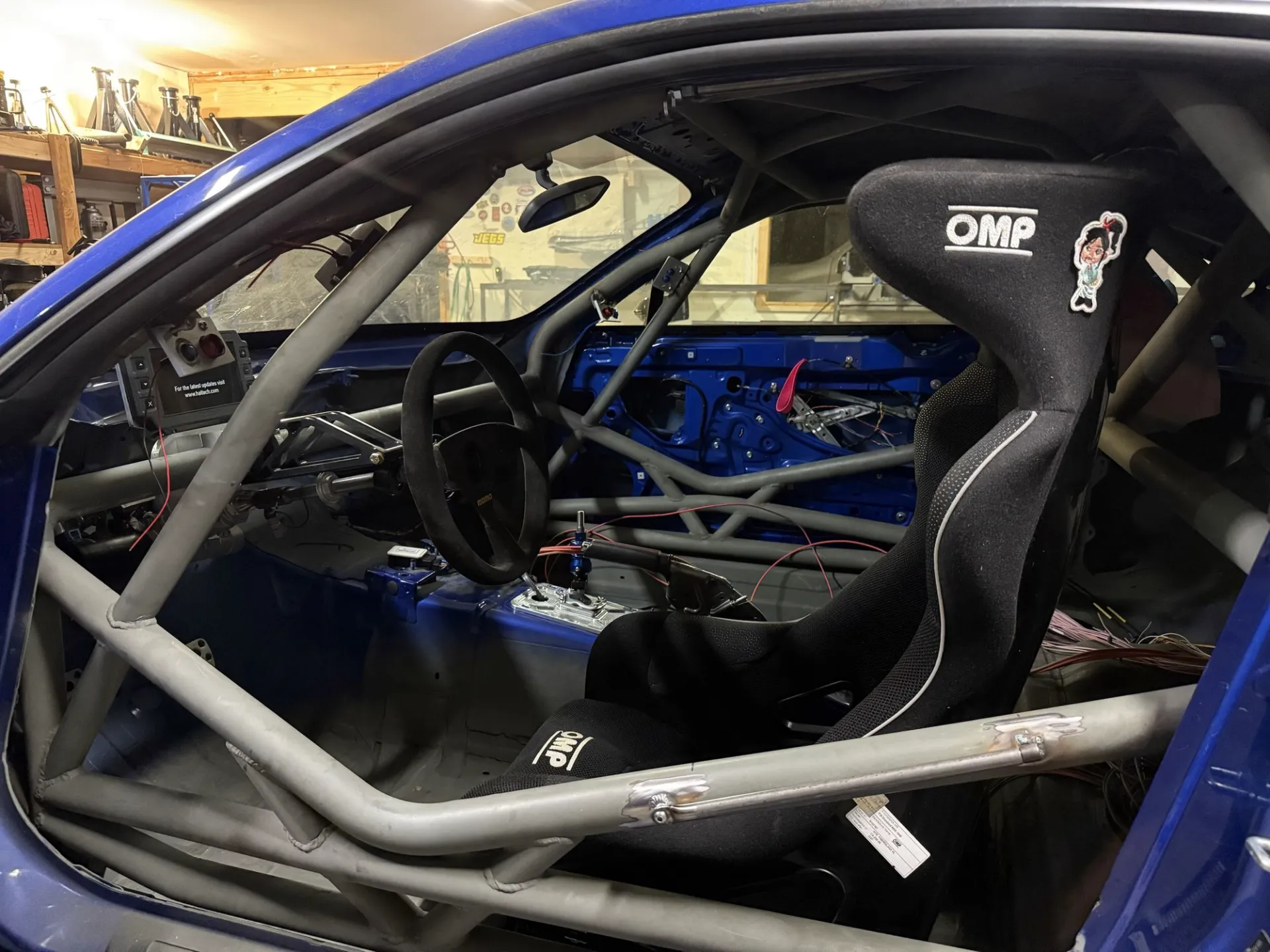
| Display | Haltech iC-7 on a machined mount clamped to the cage dash bar |
| Brakes and ABS | Chase Bays booster delete with bias valve, Delta ABS, AP Racing front brakes |
| Steering | Electric assist on a DCE controller, on a mount I machined |
| Data | AiM logging |
| Fuel | E85 |
I did the install myself.
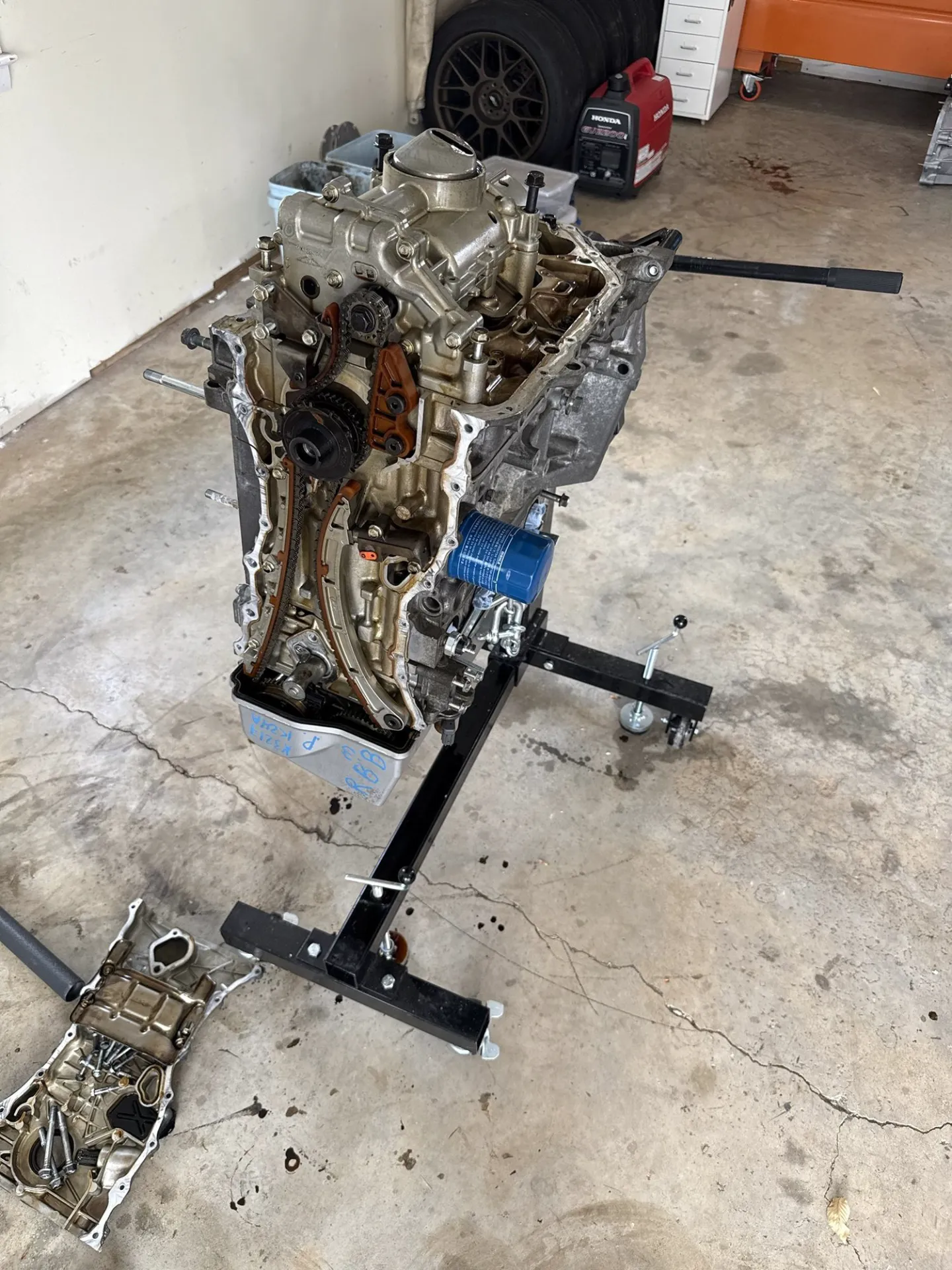
The K20 oil pump went in on the stand, with the pan and timing cover off.
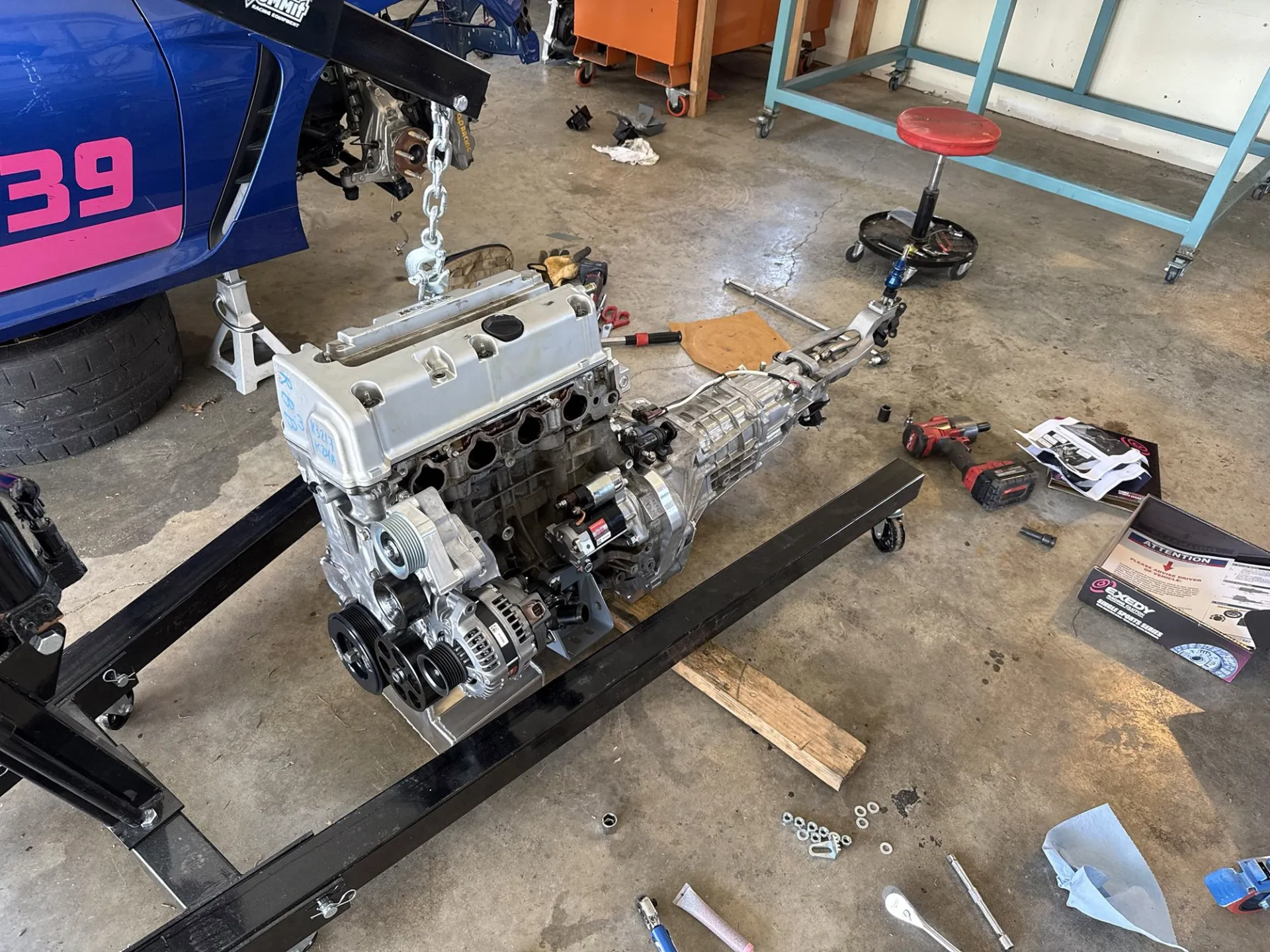
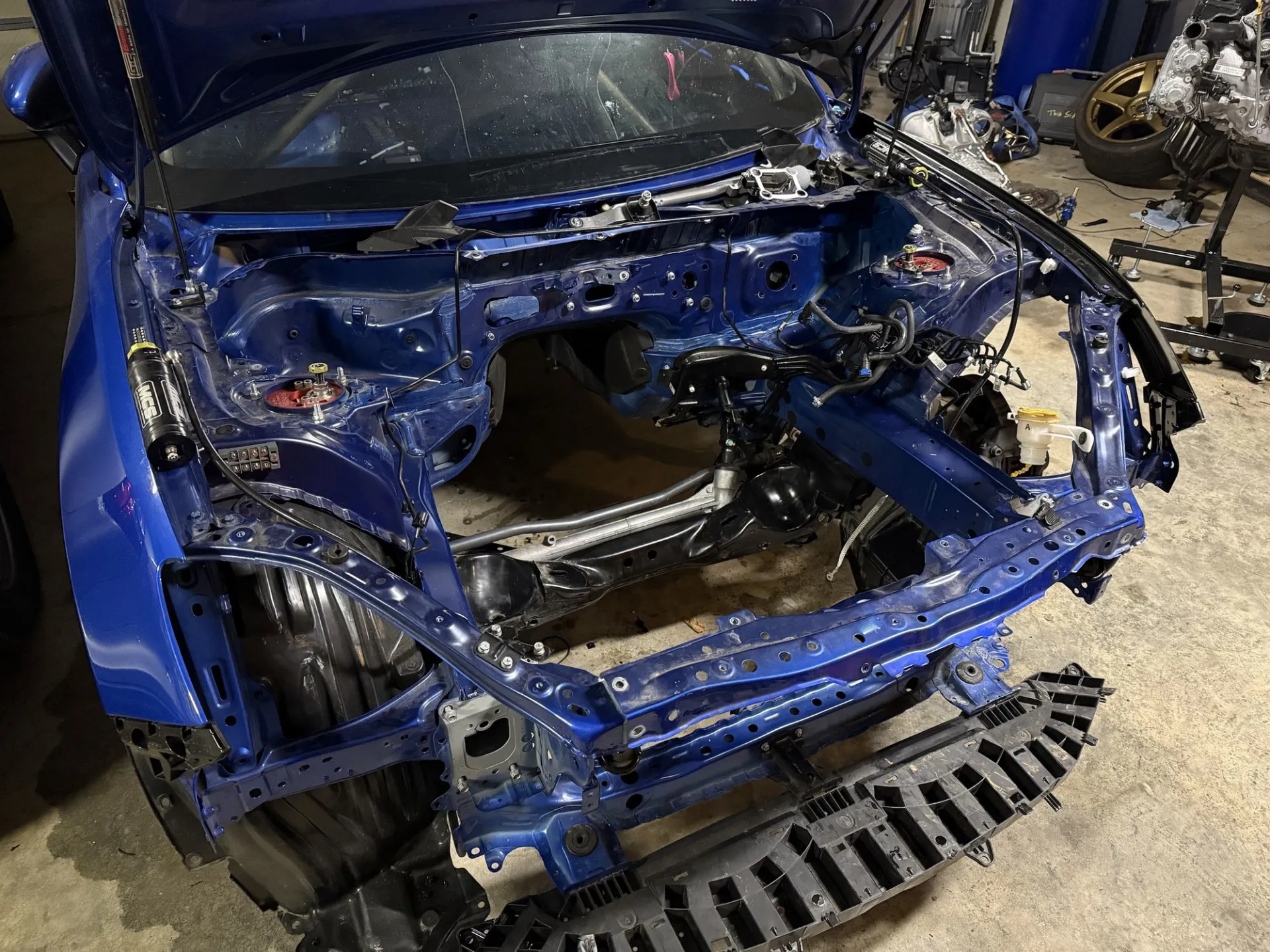
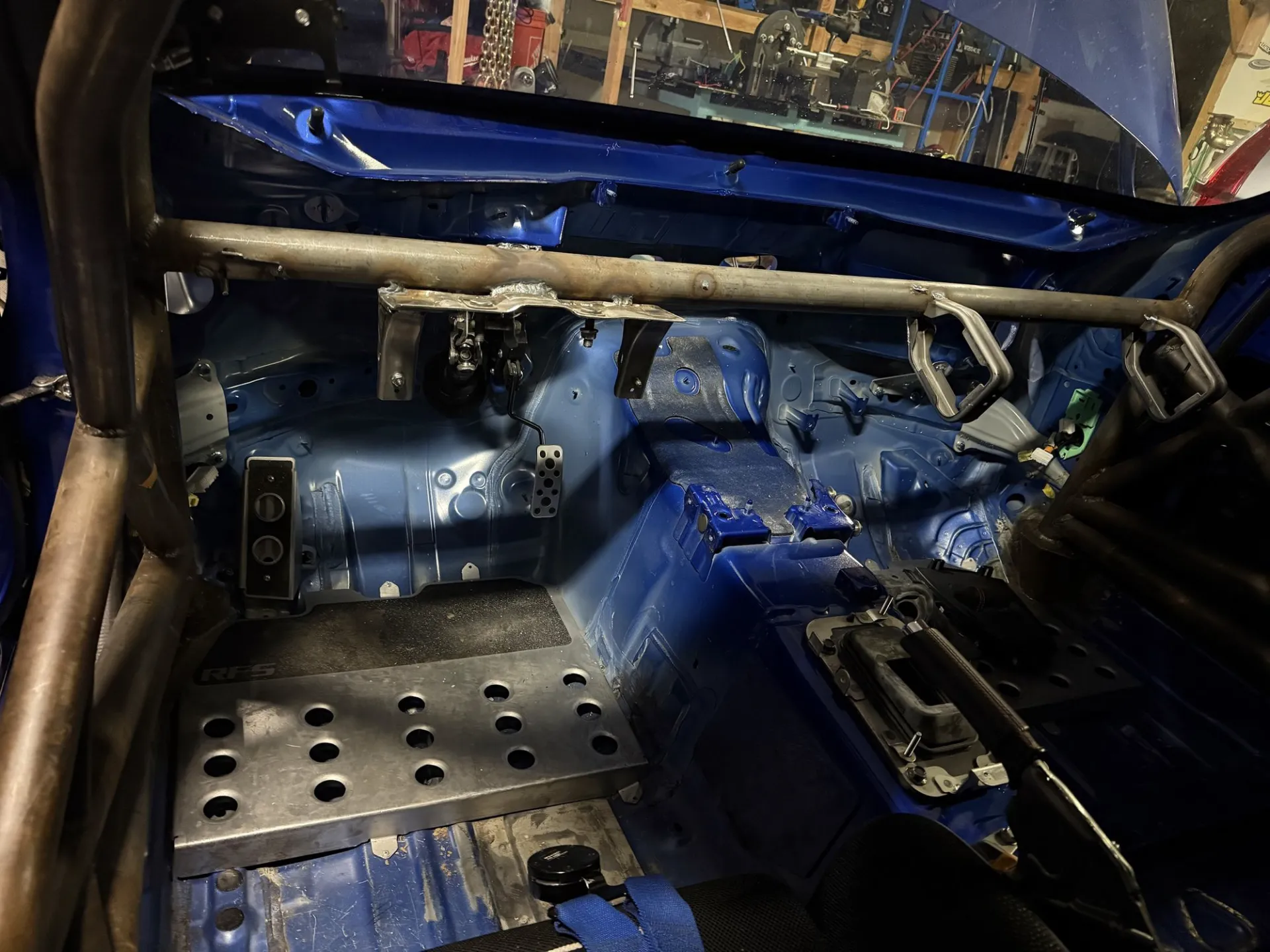
The bay and the cabin
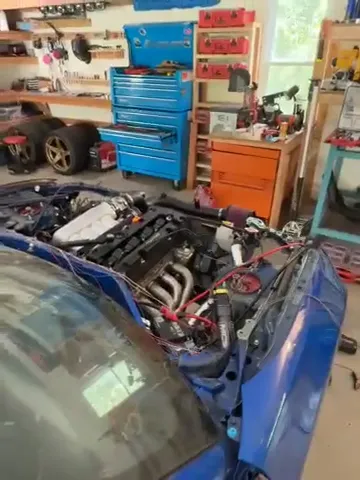
With the engine out, the factory wiring and the brake booster came out too. The dash is gone for good: the steering column now hangs off the cage dash bar.
Wiring
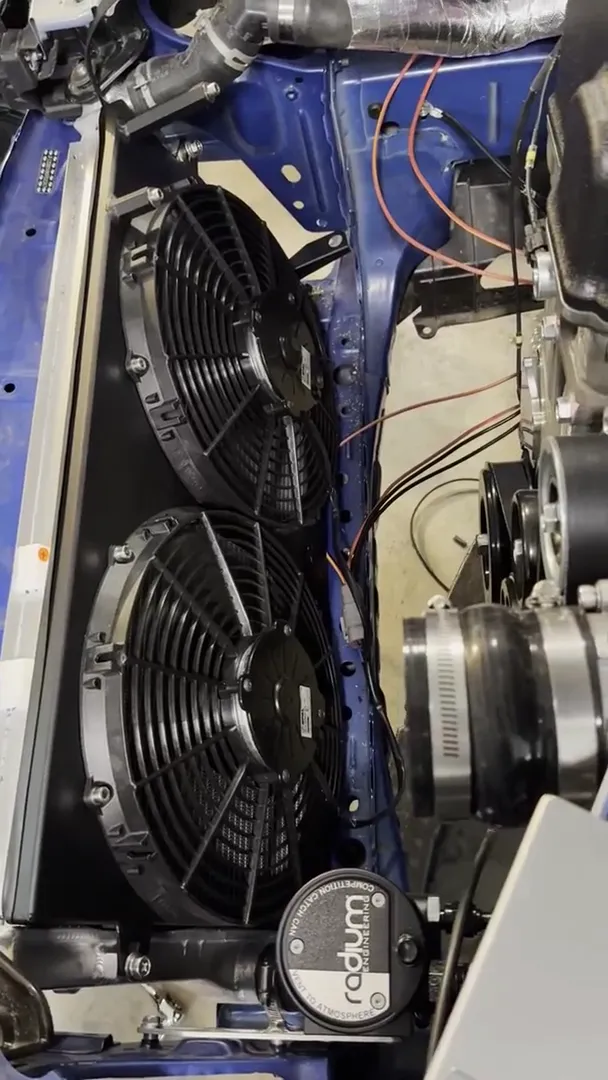
Nothing from the factory harness survived. Every connector in the car is a Deutsch. The firewall has separate bulkhead connectors for brakes, engine and front lights, plus stud-style bulkhead terminals for the power feeds.
The PDM replaces the fuse and relay box. It runs the fuel pump, both fans, ECU power, injectors on split channels, coils, starter, power steering, ABS power and the lighting.
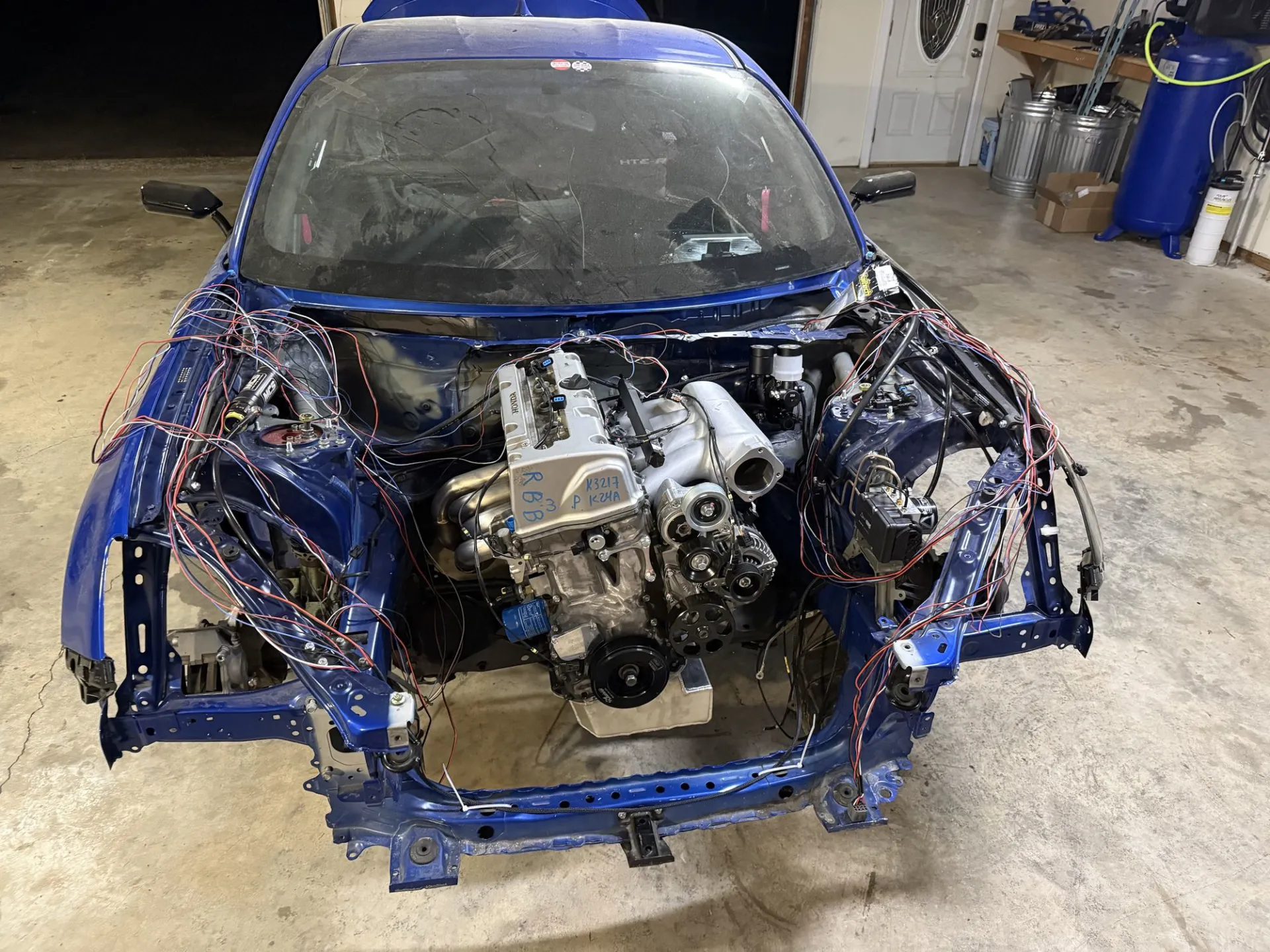
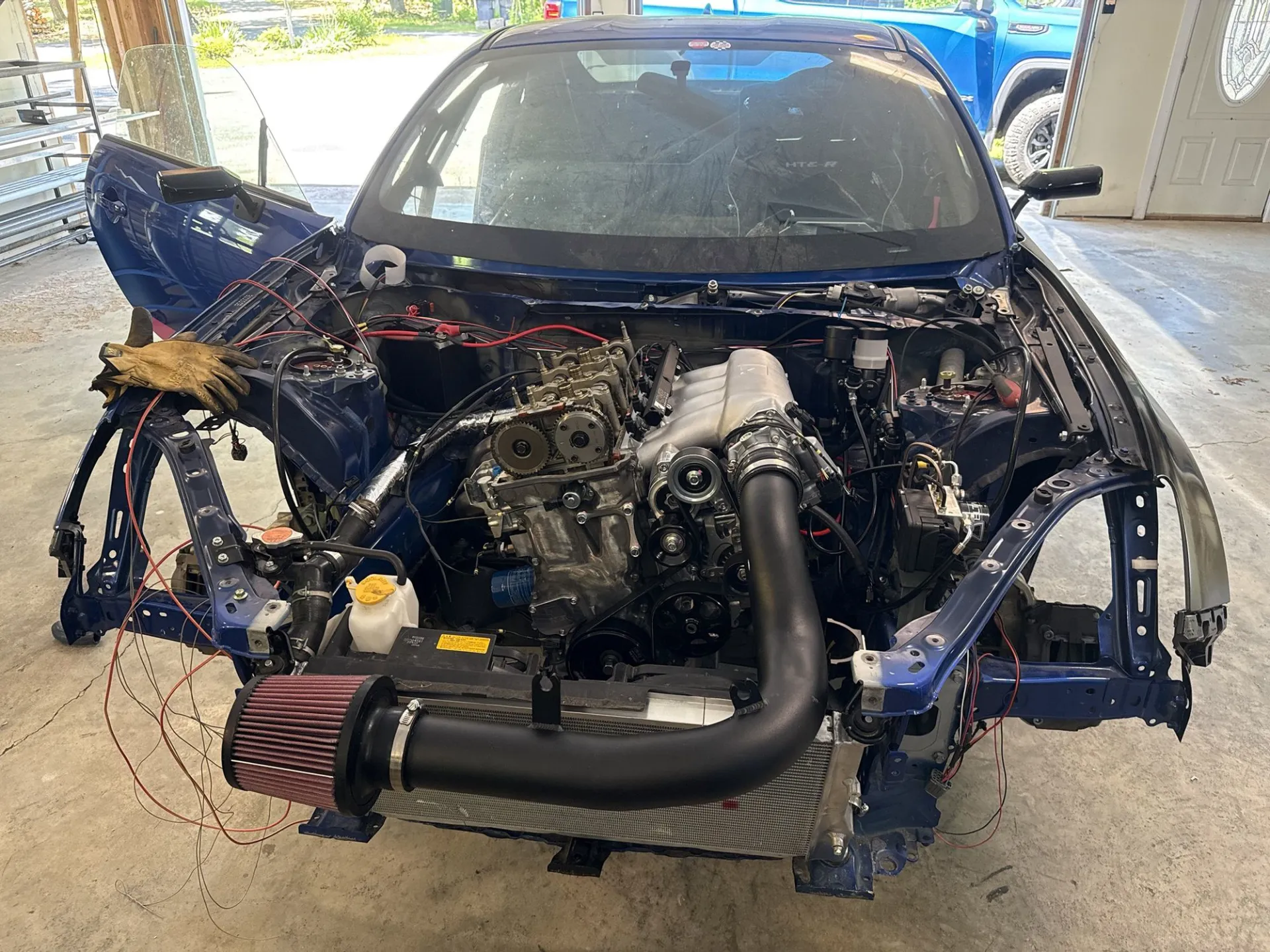
The valve cover stayed off this long because I was still setting the cam timing.
The numbers
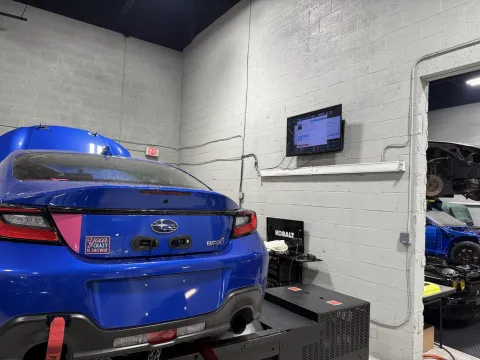
- Power: 222.8 whp and 187.7 lb-ft on E85, Dynojet, 28 May 2025.
- Rev limit: 7,340 rpm.
- Weight: 2,743 lb on the scales, 54.4% front.
| Corner | lb |
|---|---|
| Left front | 761 |
| Right front | 730 |
| Left rear | 658 |
| Right rear | 594 |
What it changed on track
A lighter nose moved the balance. The rear started stepping out mid-corner with both sway bars on their middle settings, and the car was unstable under hard braking with 50/50 line pressure front to rear. The plan is front bar to full stiff, rear to full soft, and more front brake bias. None of that is tested yet; the car has not been back on track this season.
What I got wrong
The oil pan weeps at the bolts on the exhaust side. I sealed it with a thin layer of RTV at install. A proper reseal is an engine-out job.
Build log